
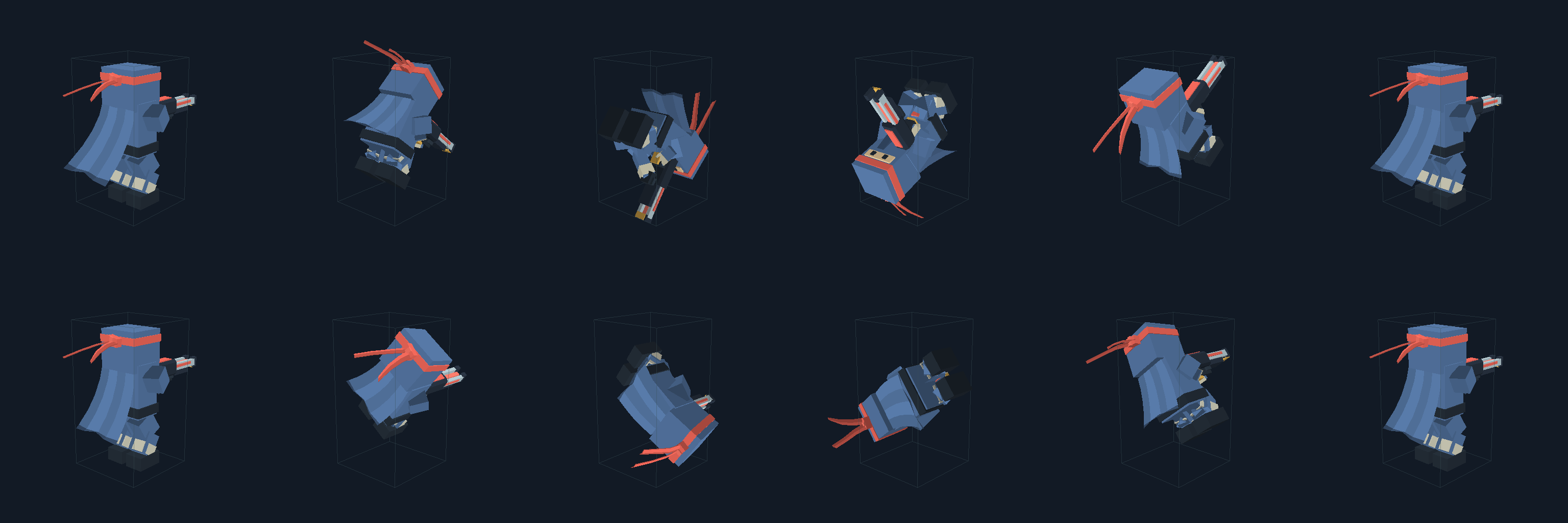
Update, 26–27 October 2026. The later blocky-body pass refines the free-arm guard, foot poses during ascent, the apex and descent, and compression on landing, while retaining full flips. Rectangular hands and sleeves replace extra mesh batches, reducing separate groups of geometry used for drawing. Movement physics, combat hit volumes and network formats are unchanged.
In the early pose sheet, the ninja could perform an airborne move while its body stayed fairly upright. The movement rules worked, but someone watching the model had little help distinguishing the second jump from another change of direction. I wanted that extra jump to look like an action the ninja had deliberately made.
The comparison uses the retained October 18 baseline and October 21 presentation sheet. Each shows forward and sideways sequences sampled in six phases. These are still images taken across the action, not an older recording recreated as video. They make it easier to inspect how the body's orientation changed.
Turning the model without changing the target
I added directional double-jump flips and refined the leaning poses around the gameplay hull—the collision shape used to represent the player. The visible body can turn through a move while the server's combat geometry stays the same. A flip should help you recognize what an opponent is doing without secretly changing which shots count as hits.
Capes follow the animated body. Small dust effects mark takeoff, the air step and landing, while shadow smoke marks the departure and arrival of a warp. Those details give the movement visible stages instead of leaving a teleport as a sudden disappearance.
The October 21 effects were deliberately short. A landing effect lasted 0.32 seconds, takeoff dust 0.18 seconds, and an air-step puff 0.22 seconds. They used pools with a limited capacity, so effects could not accumulate without a bound. Each client builds the particles locally instead of receiving their individual state over the network. Effects outside the view are discarded before their drawing geometry is constructed.
Inspecting the action and checking the cost
The final native movement check covered 33 presentation cases. Focused tests and sanitizer checks for memory errors and undefined behavior passed. The retained record dates the full-suite run separately from the later camera-clearance and dust refinements. It also explicitly records that the palette, weapon designs, hitboxes and movement physics were preserved.
I measured rendering cost in separate fixed-scene tests. A synthetic crowd flipping at the same time is useful for comparing the cost of drawing different presentations, but it is not a live match and cannot promise a frame rate. It also has no bearing on the 64-player game limit.
The aim was for the visible body to explain movement the game already supported: a deliberate air step, a recognizable landing, and an opponent whose combat geometry remains consistent throughout the animation.
A double-jump learned to turn
Actual retained pose sheets, sampled by the renderer fixture. Six phases run left to right; the first row is forward and the second sideways. These are still samples of animation, not historical video. Faint wire boxes show the aiming hull remaining upright.
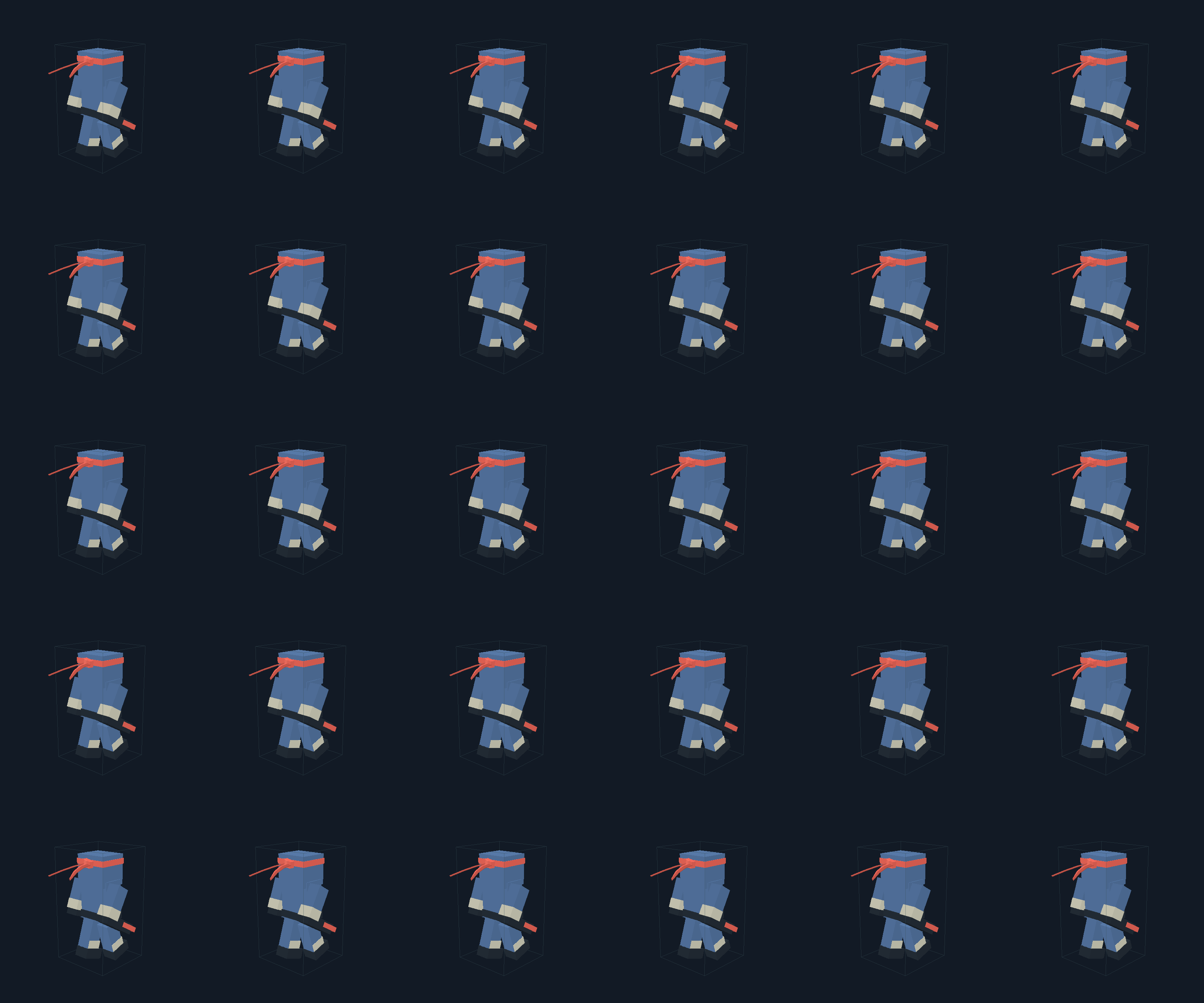
The earlier renderer holds the same upright pose through the sampled phases.
Original PNG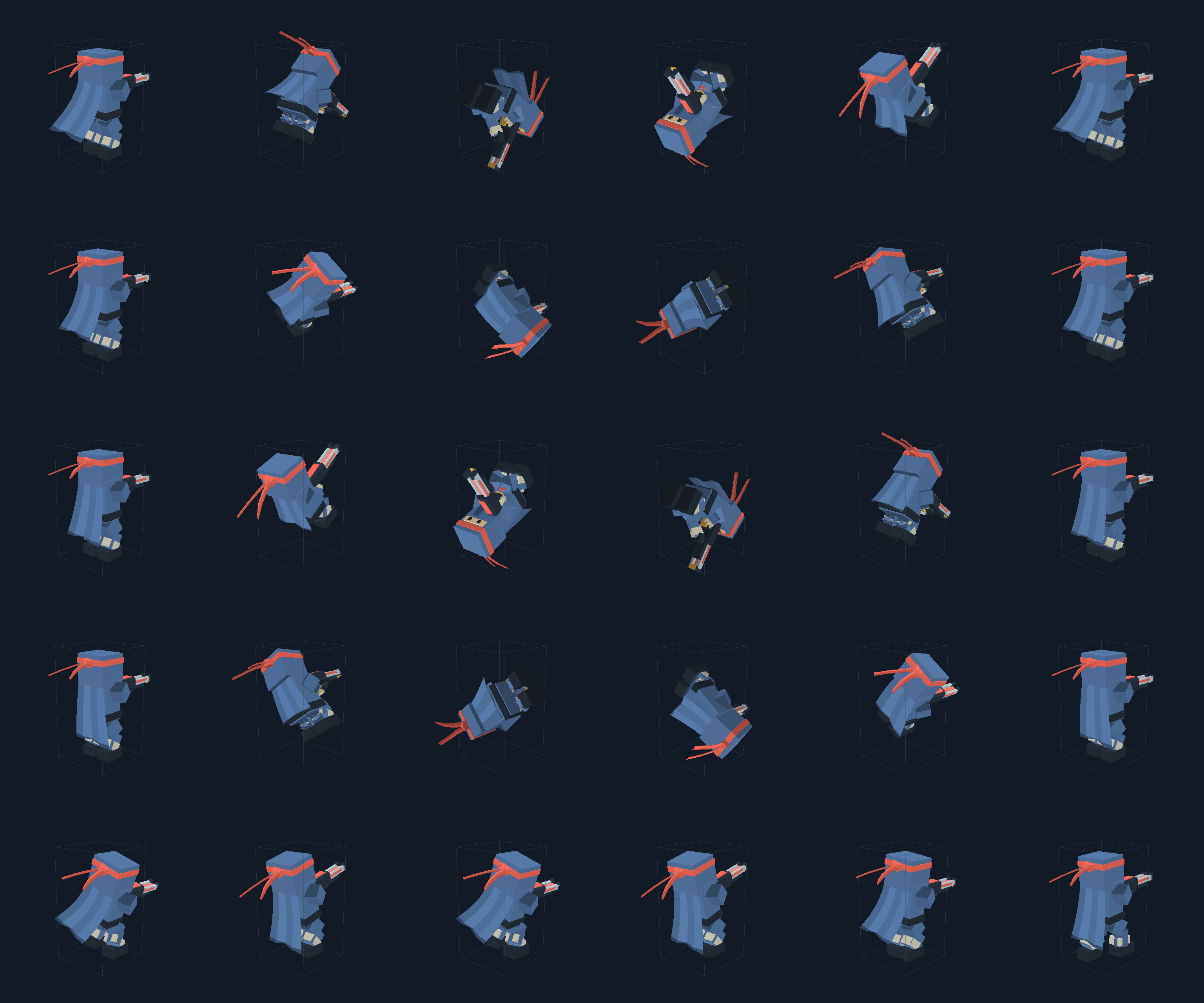
The later renderer turns the model through directional flips, with a cape following the pose.
Original PNGStill-image archive dates come from retained image file timestamps in Los Angeles time. An earlier-dated article may include later builds; each image is dated separately. Images are genuine engine or native-editor output. Download sources, transforms and SHA-256 hashes.