
The old name described ninja instagib: a game built around killing an unprotected opponent with one shot. By October 19, I had added fights where you could draw a bow, throw shrapnel, carry home a flag or defend a demolition site. The name still described where I had started, but it no longer described everything I was making.
SHADOWFRAG gave those additions room while keeping movement at the center. Directional leaps and double-jumps let you change an approach; chi-jumps launch you where you aim, and shadow grenades let you warp across the arena. The preceding balance work had shortened horizontal travel without changing the quick vertical arcs. Adding more equipment did not require throwing those controls away.
Bringing the existing game into the new name
The rename reached the product and executable names, the package and launcher, server help and the active interface. It also had to carry player profiles across. Someone who had already adjusted their mouse sensitivity or other settings should not have to rebuild that setup because the title changed.
On Linux, the retained verification records 79 passing headless tests—automated tests that run without opening a game window—along with a fresh server configuration, package checks and an audit of the new branding. I kept historical evidence under its original names so older records would still describe the build they came from.
That particular check did not include running the native Windows build. Updating a build configuration was part of the work, but it was not evidence that the resulting program had been exercised on Windows. Keeping that distinction in the record matters when returning to the results later.
Keeping the fights connected
I separated objectives, equipment and shields so that adding a weapon did not mean creating a disconnected game mode around it. A rail duel and a flag match can share their movement. A bow changes when it is safe to cross a lane; a grenade changes how useful a piece of cover is. You can learn the route once and still have reasons to approach it differently.
The visual design follows the same aim. Compact shapes, bright suits and expressive headwear help make a moving ninja recognizable. The build later grew to 20 maps, with a separately tested limit of 64 players including bots. Those were developments beyond the rename itself, but the broader name could accommodate them without losing the original emphasis on movement and precision.
From a prototype menu to a place to play
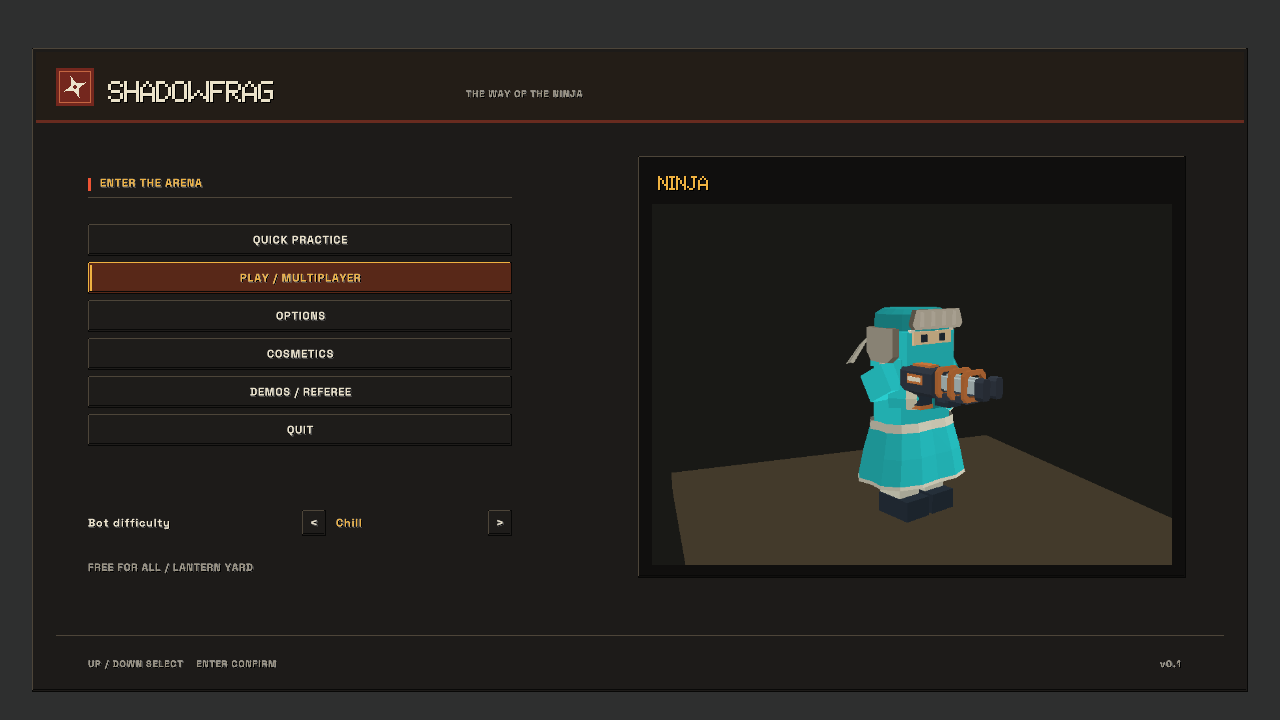
Retained engine screenshots show the change in hierarchy, identity and player preview. The archive dates below come from the retained image files.
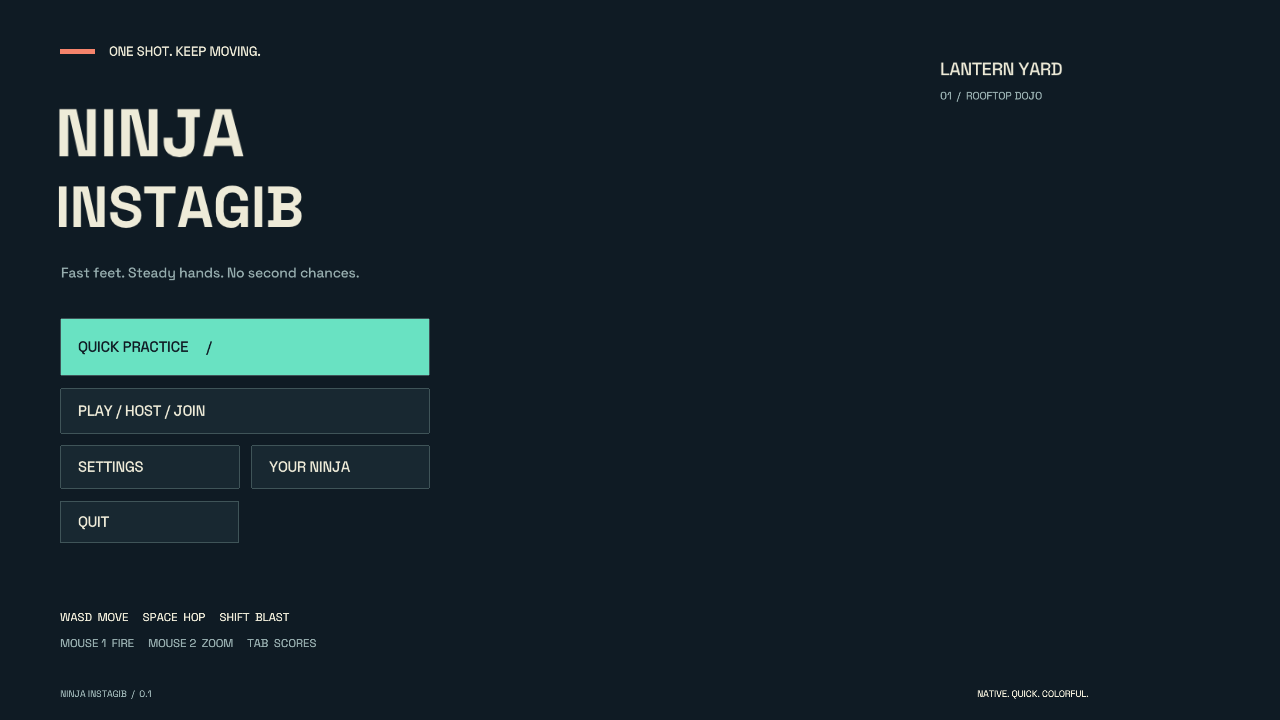
The prototype puts practice, hosting and settings in a compact left column.
Original PNG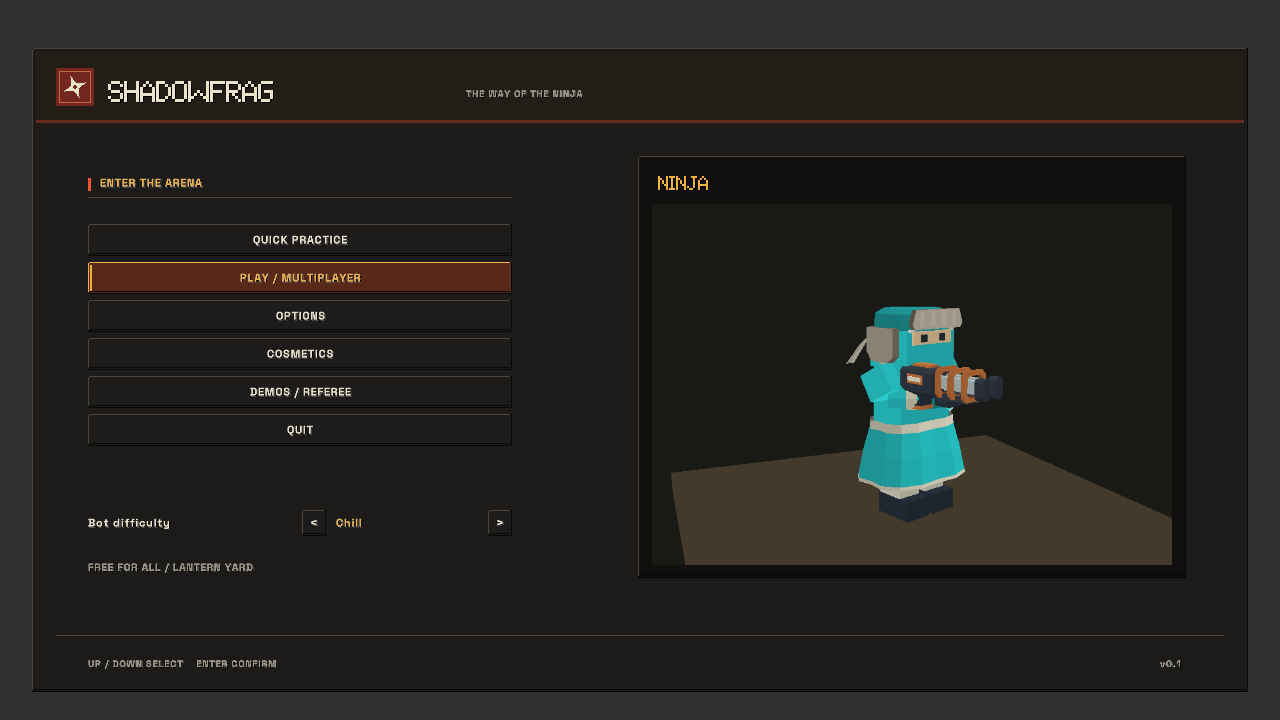
The later interface adds a persistent navigation rail and a dedicated preview of your ninja.
Original PNGThe same settings, a clearer home
The crosshair editor makes a useful comparison: the preview and color choices remain visible while navigation and control groups become more consistent.
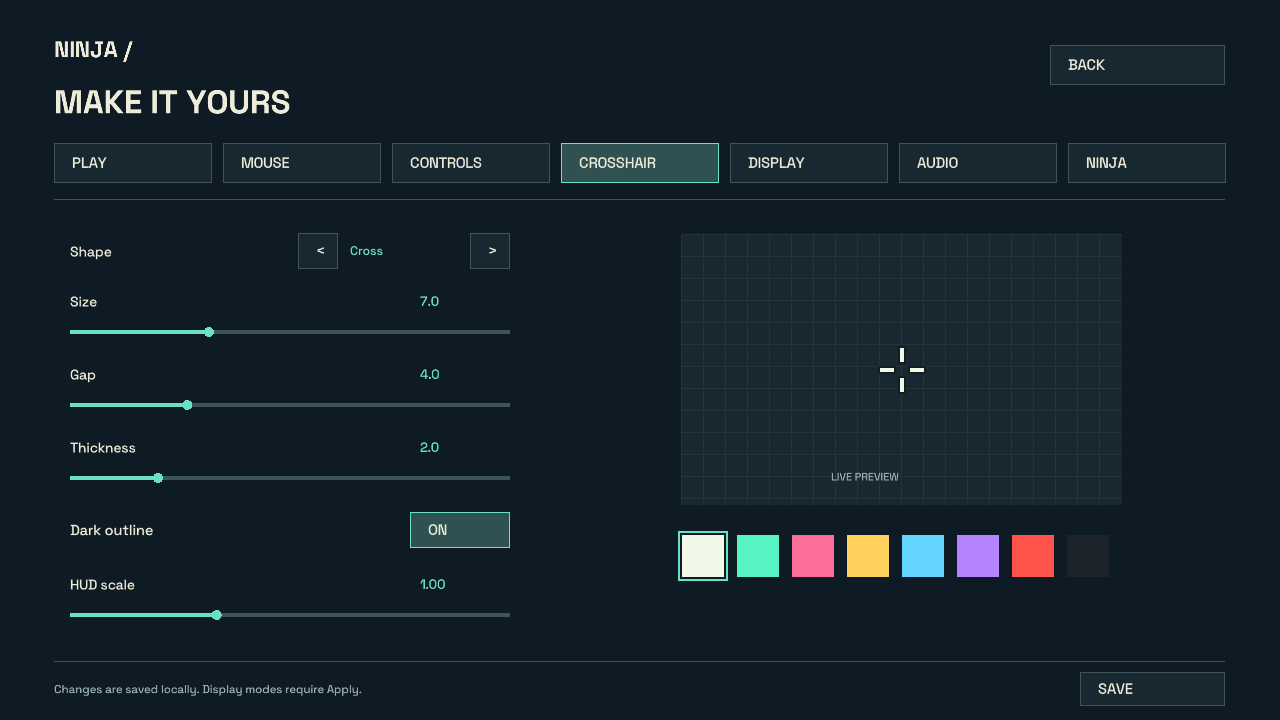
A horizontal tab strip sits above the original crosshair controls.
Original PNG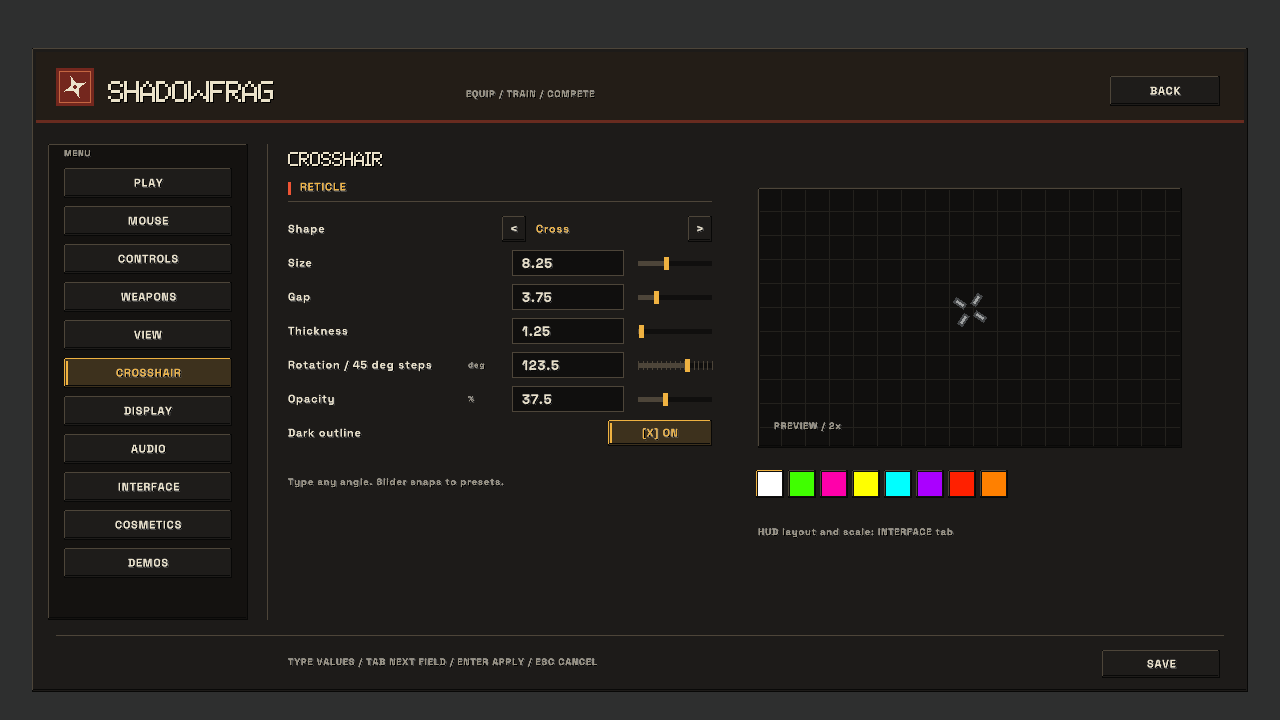
The crosshair preview stays beside the controls inside the newer settings layout.
Original PNGStill-image archive dates come from retained image file timestamps in Los Angeles time. An earlier-dated article may include later builds; each image is dated separately. Images are genuine engine or native-editor output. Download sources, transforms and SHA-256 hashes.