
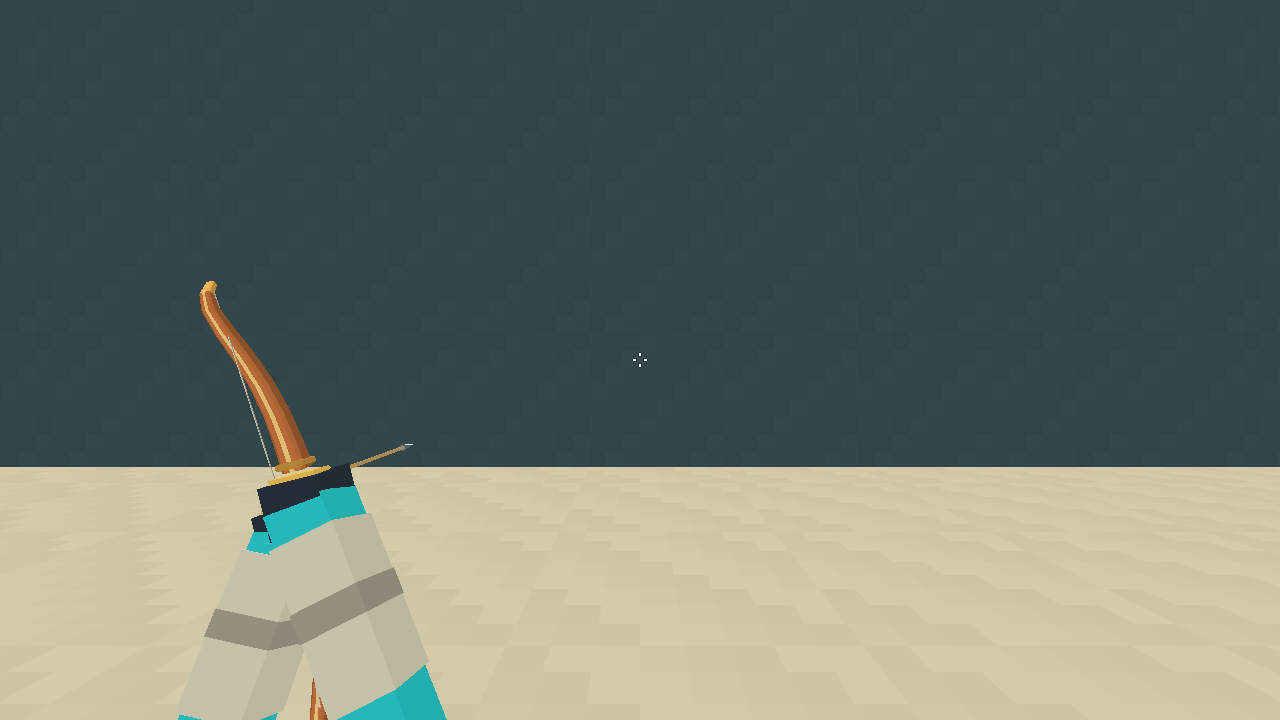
The bow was taking up space the player needed for aiming. Its grip, string and draw all had to be visible, but the early first-person model stretched across too much of the view, especially on an ultrawide screen. Making the weapon look clear was not enough if it hid the opponent behind it.
I reworked the framing and poses, then compared the ready, drawn and zoomed views with the earlier gallery. The aim was to keep the bow recognizable while moving it away from the part of the screen where a player would be choosing a release.
Measuring the space around the target
For the comparison, I defined a central aiming region: the middle 40–60% of the screen's width, extending from 15–75% of its height. That gave me a consistent area to check before and after the change.
In the standard ready pose, the old bow covered 7,989 pixels inside that region; the revised bow covered zero. In the ultrawide ready pose, coverage fell from 25,102 pixels to zero. These are counts of pixels occupied by the rendered model in those captures, rather than measurements of aiming accuracy.
The bow also occupied less of the screen overall. In the standard ready view, its footprint fell from about 9.61% to 5.29% of the image. I checked drawing and zooming too, because clearing the center while the bow was idle would not help if pulling the string put it back in the way.
The verification covered 24 poses across standard and ultrawide views, a large 4:3 setting and a small ultrawide setting. It reported no changed pixels in the defined central aiming region. That establishes what happened in the checked views; it does not cover every possible aspect ratio, weapon scale or later cosmetic model.
Checking the bow from both sides
The visual review included half and full draw, zoom, steep upward and downward aim, and four observer angles. Another player still needs to see that an opponent is drawing a bow. Their view has different requirements from the first-person weapon in front of your own camera.
The recorded gameplay fingerprint, used to check for gameplay changes, matched the earlier build. Thirty-five first-person and observer images of other weapons were also pixel-identical to the previous gallery. Those checks helped keep the scope of the change clear: I had adjusted how the bow was presented, without folding a weapon rebalance or unrelated model changes into the work.
For this pass, the useful measurement was how much room the player had to see the fight. The revised views kept the bow's draw visible and cleared the checked aiming region. That was a more concrete target than simply asking for a better-looking model.
Make room to see the shot
The previous and reworked ready poses use the same fixture and camera. This pair illustrates the framing change; the article’s coverage figures come from the separately retained measurement report.
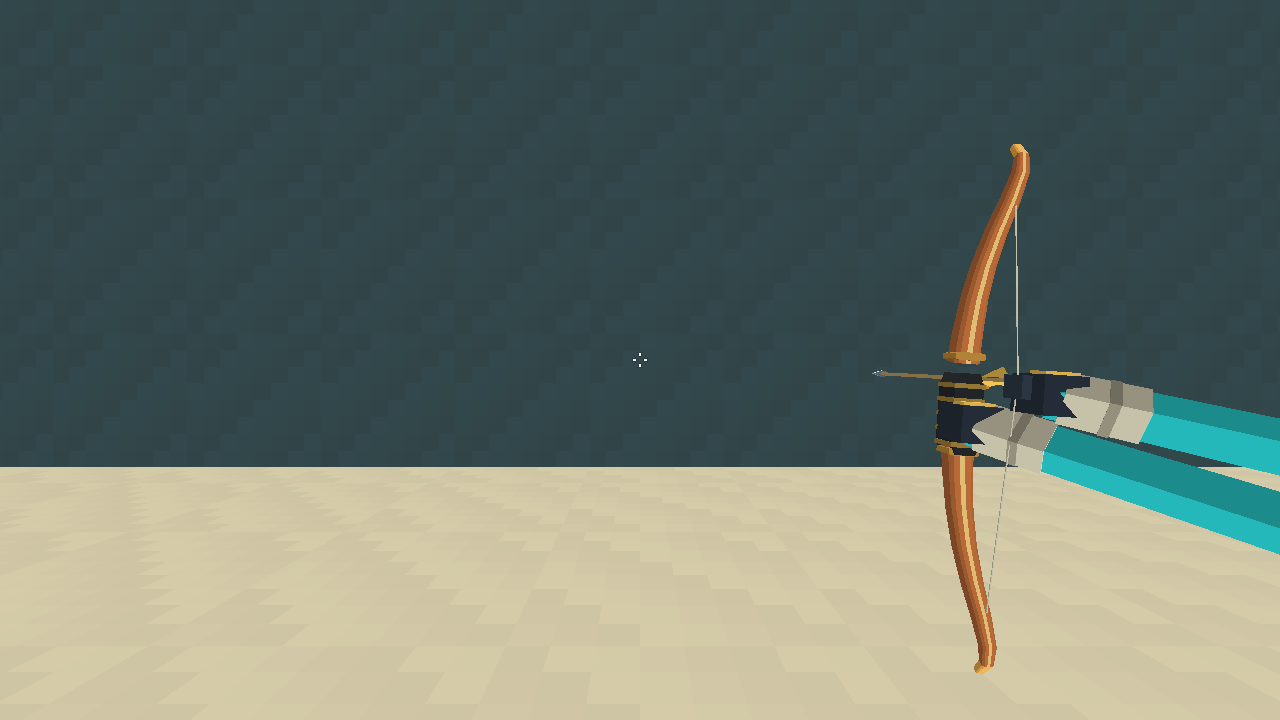
The earlier model holds the bow upright to the right, with the arms reaching into the view.
Original PNG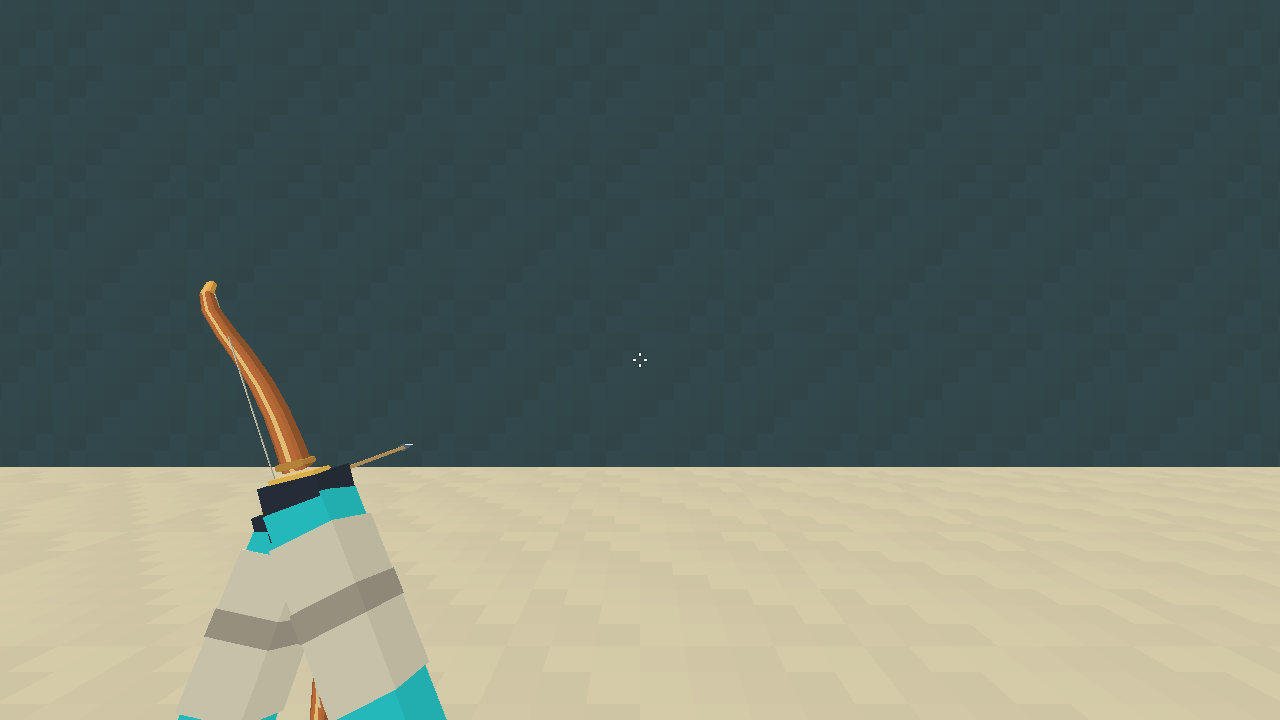
The reworked pose lowers the bow to the left and clears the central view.
Original PNGStill-image archive dates come from retained image file timestamps in Los Angeles time. An earlier-dated article may include later builds; each image is dated separately. Images are genuine engine or native-editor output. Download sources, transforms and SHA-256 hashes.